

SAP Business One ERP integration means connecting SAP Business One (SAP B1), SAP’s ERP for small and midsize companies, with external systems such as eCommerce stores, marketplaces, POS, CRM and EDI partners, so items, stock, prices, customers, orders and invoices sync without manual entry. In 2026 the main technical routes are SAP’s Service Layer (an OData/REST API, with webhooks since 10.0 FP 2602), the older DI API, and the integration framework (B1if), usually used through an integration partner or an iPaaS. SAP Business One 10.0 is in mainstream maintenance until December 31, 2028, and SAP says version 11 will follow.
This guide explains each integration option, the systems most often connected to SAP B1 and how to choose an approach.
What is SAP Business One?
SAP Business One (SAP B1) is an ERP application for small and midsize businesses. It covers accounting and financials, purchasing, inventory, sales and customer management, production, reporting and analytics. It runs on Microsoft SQL Server or SAP HANA, on premises or hosted by an SAP partner.
Because SAP B1 is usually the system of record for items, stock and finance, most companies need it to exchange data with the sales channels and tools around it.
SAP Business One integration options
SAP Business One offers several technical interfaces. Which one an integration uses depends on the database version, the deployment and who builds it.
| Option | What it is | Typical use |
|---|---|---|
| Service Layer | HTTP/OData API (OData v3 and v4, JSON), runs on Linux or Windows | New integrations, web and cloud apps, iPaaS connectors |
| Service Layer webhooks | Event notifications, for example when a business object is created or updated (10.0 FP 2602 and later) | Near real-time sync without polling |
| DI API | The established SDK (COM objects, SAPbobsCOM) on Windows |
Existing add-ons and .NET integrations |
| Integration framework (B1if) | Browser-based tool for designing integration scenarios, shipped with SAP B1 | Partner-built scenarios, SAP products that rely on it |
| iPaaS or partner connector | Managed integration built on the interfaces above | Connecting several stores, marketplaces or apps with monitoring |
Service Layer
SAP describes the Service Layer as a “new generation of extension API” for SAP Business One data and services. It is built on HTTP and OData, supports OData version 3 and version 4, and exposes the same business objects as the DI API (both use the same DI Core), so object and property names match. Since SAP Business One 10.0 PL01 it runs on both SUSE Linux and Microsoft Windows and supports the Microsoft SQL Server version as well as SAP HANA.
SAP documents a few limitations compared with the DI API: no direct SQL RecordSet, no ImportFromXML/ExportToXML, and no user transactions spanning several requests. For most order, item and customer sync scenarios these limits do not matter.
Webhooks
As of SAP Business One 10.0 FP 2602, the Service Layer supports webhooks: you subscribe to events, and a new Webhook Messenger Service delivers a notification to your endpoint when a subscribed event happens, such as a sales order being created or a business object being updated. The receiving application then reads the full record through the Service Layer. Webhooks let integrations react to changes without polling SAP B1 on a schedule.
DI API
The Data Interface API (DI API) is the long-standing SDK for SAP Business One, used through COM objects such as SAPbobsCOM.Documents. Many existing add-ons and integrations are built on it. For new projects, check with your SAP partner whether the Service Layer covers your scenario first, since it does not need a Windows COM client.
Integration framework (B1if)
The integration framework for SAP Business One (B1if) is a web browser-based tool for building data-exchange scenarios between SAP B1 and other systems such as eCommerce, CRM and HR applications, and for connecting subsidiaries and business networks. It is installed with SAP Business One, and SAP still offers training for it. Building scenarios in B1if requires specialist skills, so it is usually done by an SAP partner.
iPaaS and partner connectors
An integration platform (iPaaS) or a partner connector uses the interfaces above and adds ready-made mappings, scheduling, queues, error handling and monitoring. This is usually the quickest way to connect SAP B1 to several sales channels at once and to keep the integration maintained when an external API changes.
Benefits of SAP Business One ERP integration
An SAP Business One integration can add, update or read SAP B1 objects automatically, such as items, business partners, sales orders, deliveries, invoices and incoming payments. Typical results:
- Orders from every channel arrive in SAP B1 without re-keying.
- Stock and prices on stores and marketplaces follow SAP B1.
- Customers and invoices stay consistent between SAP B1, the CRM and accounting.
- Teams spend less time reconciling, and errors are caught before they reach finance.
Common SAP Business One integrations
The SAP Business One ERP integration can synchronize data with POS systems, CRM, eCommerce platforms, marketplaces, mobile apps and accounting systems.
SAP Business One POS integration
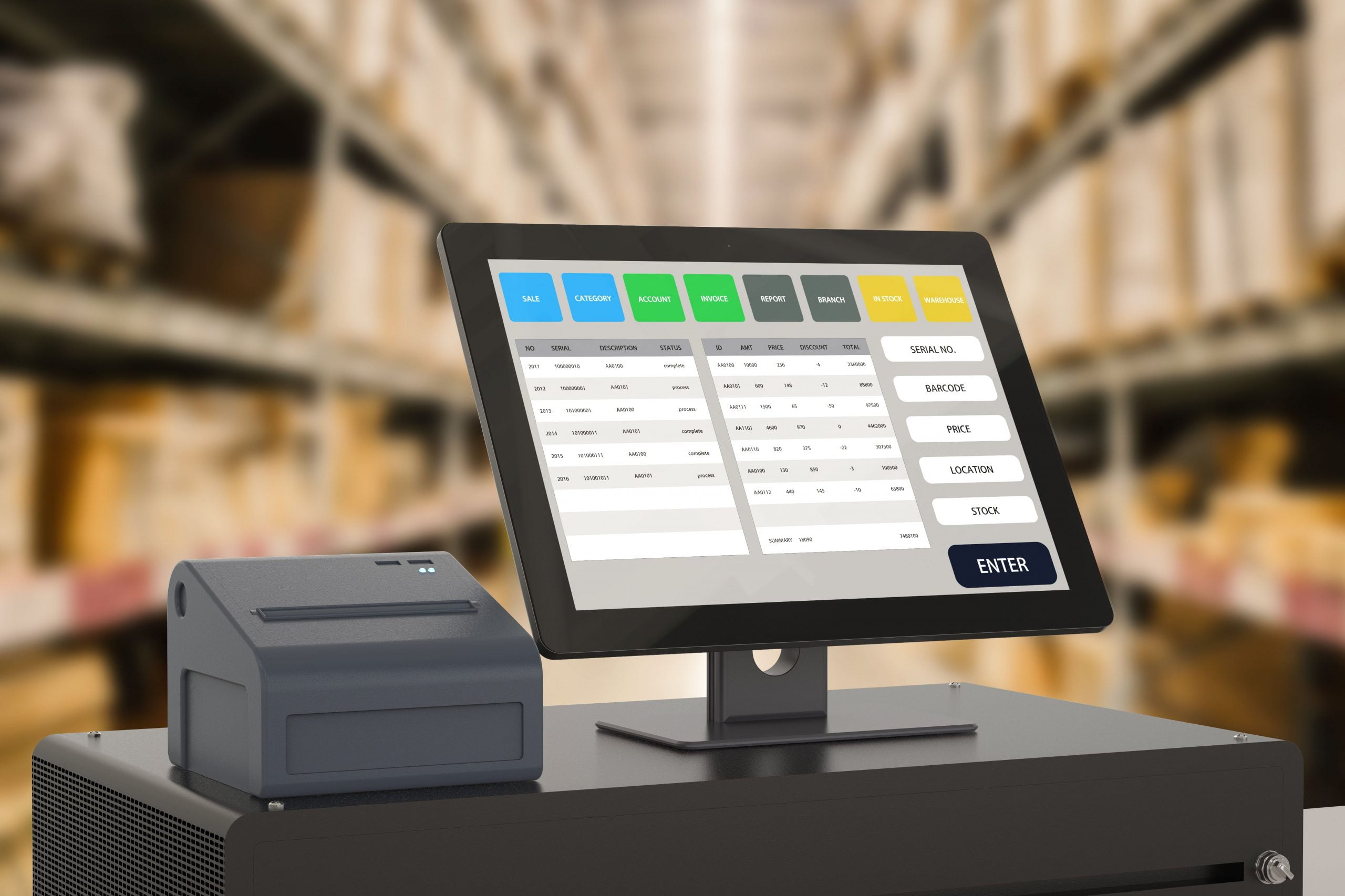
Retailers connect their point-of-sale system to SAP B1 so store sales, returns and payments post to the ERP and stores sell from the same item and price data. SAP’s own POS for this segment is SAP Customer Checkout, which SAP lists as integrated with SAP Business One. Third-party POS systems can be connected through the Service Layer or an integration platform.
Typical data flows: items, prices and promotions from SAP B1 to the POS; sales receipts, returns and payments from the POS to SAP B1; stock levels in both directions.
Examples of POS systems connected to SAP Business One:
SAP Business One CRM integration
SAP B1 includes CRM functions (business partners, activities, sales opportunities, campaigns and service calls). Companies that use a dedicated CRM connect it to SAP B1 so sales reps see stock availability, prices and order history, and won deals become sales orders in SAP B1.
Typical data flows: customers and contacts in both directions; items and price lists from SAP B1 to the CRM; quotes and orders from the CRM to SAP B1; invoice and payment status back to the CRM.
Examples of CRM systems connected to SAP Business One:
- Salesforce
- HubSpot
- Dynamics 365 Sales
- Freshsales
- Zoho CRM, SugarCRM, Pipedrive and Zendesk (through APIs or a partner connector)
For a broader view, read what is CRM integration.
SAP Business One eCommerce integration
eCommerce integration connects online stores and marketplaces, B2B or B2C, to SAP B1, so online orders flow into the back office and the store shows SAP B1 items, stock and prices.
Typical data flows:
- Items, categories, prices and stock from SAP B1 to the store or marketplace
- Orders and customers from the store to SAP B1
- Shipments, tracking numbers and invoices from SAP B1 back to the store
- Several stores or marketplaces connected to one SAP B1 company
eCommerce platforms and marketplaces integrated with SAP Business One:
- Shopify and Shopify Plus
- Magento (Adobe Commerce)
- BigCommerce
- WooCommerce
- Wix
- Amazon, eBay and Walmart
- Shopee, Lazada and TikTok Shop
See all SAP Business One integrations.
SAP Business One mobile apps
SAP publishes mobile apps for SAP Business One, such as SAP Business One Sales and SAP Business One Service, for field sales and service teams. They let users manage opportunities, quotations and orders, check stock and product details, follow up on activities and service calls, and view KPIs. Check the current app listing and the SAP B1 version and database each app requires before you plan a rollout; some apps require the SAP HANA version.
SAP Business One accounting
Financial management is at the core of SAP Business One: general ledger, accounts receivable and payable, banking, and financial reporting. Companies that keep a separate accounting system, for example at a parent company or subsidiary, integrate invoices, payments and journal entries with SAP B1. Examples include QuickBooks and Xero.
How to integrate SAP Business One with other systems
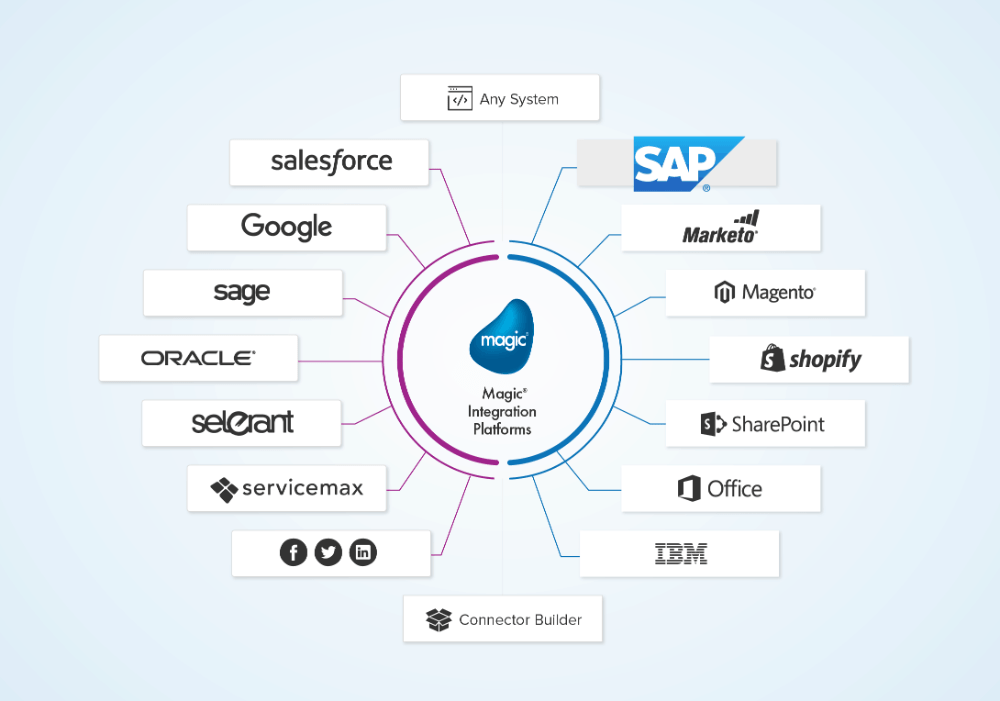
A typical SAP Business One integration project follows these steps:
- Define the flows. List which objects move (items, stock, prices, business partners, orders, deliveries, invoices, payments), in which direction and how often.
- Choose the master system for each object. SAP B1 is usually the master for items, stock and finance; the store or CRM is often the master for new customers and orders.
- Check your SAP B1 version and database. The SAP B1 version (and feature package) and database (SQL Server or HANA) determine whether the Service Layer and webhooks are available, and which DI API version to use.
- Map the fields. Item codes, units of measure, warehouses, price lists, tax codes, payment methods and shipping methods rarely match between systems.
- Choose the approach (see the checklist below), then build and test with real data in a test company database.
- Monitor after go-live. Make sure failed records are reported with a reason and can be resent.
How to choose: a checklist
- One store, simple flows, in-house developers: a direct Service Layer integration can be enough.
- Existing add-ons built on the DI API: keep them running, and use the Service Layer for new work where it covers the scenario.
- Scenarios your SAP partner already maintains in B1if: keep them in B1if unless they are being rebuilt.
- Several stores, marketplaces, POS or a CRM at once: an iPaaS or a managed integration service is usually easier to monitor and maintain.
- Near real-time stock or orders: check whether your release supports Service Layer webhooks (10.0 FP 2602 and later) or whether a scheduled sync is acceptable.
- Budget for maintenance: external APIs change regularly; ask who updates the integration when they do.
SAP Business One ERP integration providers
You can build an SAP B1 integration yourself, ask your SAP partner, or use an integration platform. Here is one option, followed by the main alternatives.
HexaSync
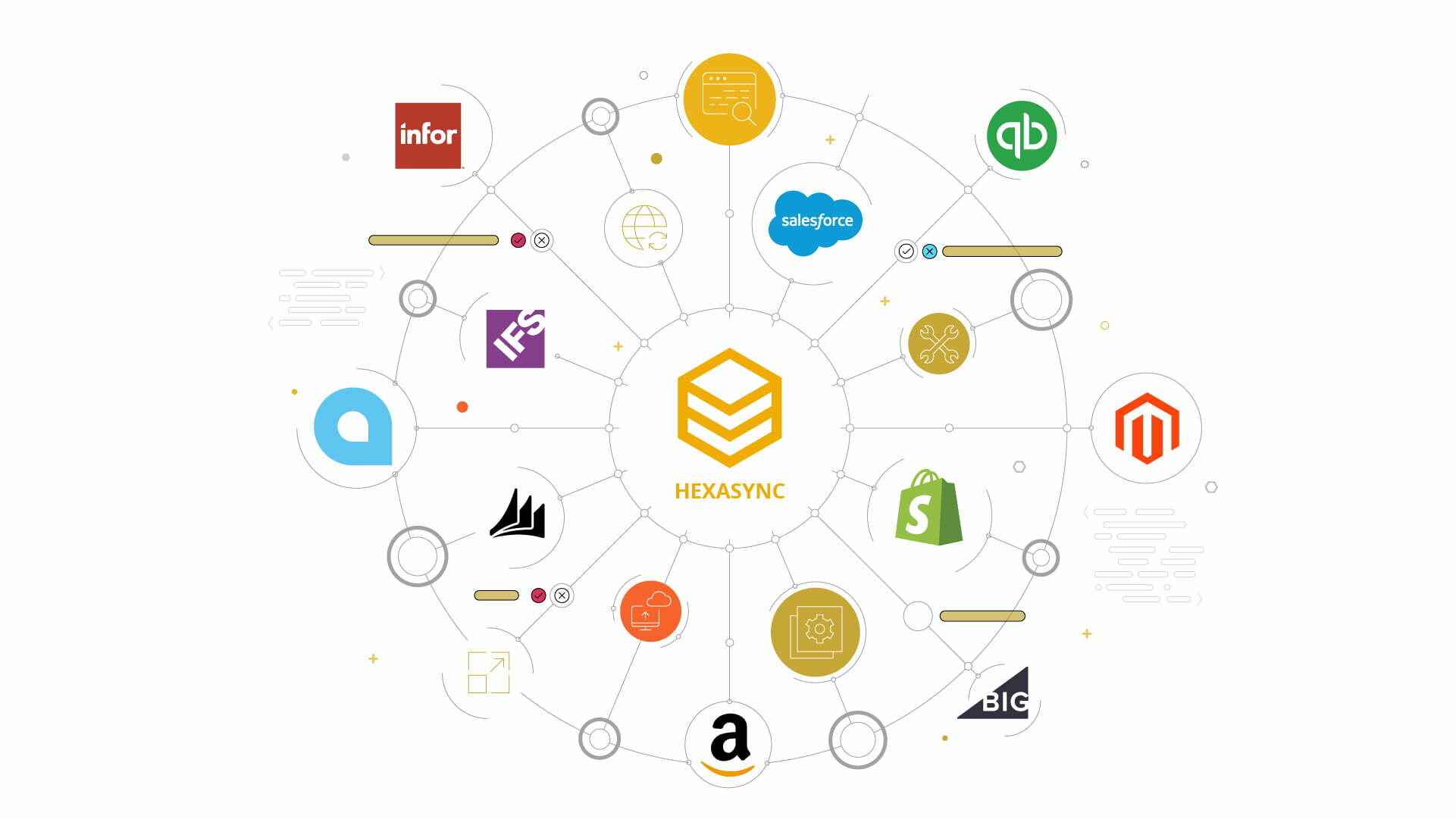
HexaSync is Beehexa’s integration platform (iPaaS). It keeps products, inventory, prices, orders, customers and invoices in sync between ERP and accounting systems, including SAP Business One, and sales channels such as Shopify, Magento, WooCommerce, Amazon, Shopee, Lazada and TikTok Shop.
Features:
- Middleware: HexaSync sits between SAP B1 and the other systems and handles the integration logic.
- Cell-based mapping: maps data points from system to system, including custom fields.
- Data validators: data is validated before it is written to the destination.
- EAV design pattern: unifies data modeling between different systems.
- Message-queue architecture: decouples systems for better performance, reliability and scalability.
- Schedulers and monitoring: sync tasks run on configurable schedules, with task tracking and error reports.
Each HexaSync integration is scoped and deployed by the Beehexa team and priced as a one-time deployment fee plus an annual subscription per integration profile; see pricing. To discuss your SAP Business One project, contact us.
Other options
- Your SAP Business One partner: SAP partners implement and support SAP B1, and many build integrations with the Service Layer, DI API or B1if.
- Other iPaaS and B2B integration vendors: for example eBridge Connections, which has been part of Jitterbit since 2021 and focuses on eCommerce and EDI integrations for ERPs including SAP Business One.
- EDI providers: if you exchange orders, advance shipping notices and invoices with retail trading partners, an EDI provider connected to SAP B1 handles the EDI formats and partner networks.
Sources
- SAP Help Portal, Working with SAP Business One Service Layer: https://help.sap.com/doc/fc2f5477516c404c8bf9ad1315a17238/10.0/en-US/Working_with_SAP_Business_One_Service_Layer.pdf
- SAP Support, Maintenance for SAP Business One: https://support.sap.com/en/offerings-programs/support-small-medium-enterprises/business-one/maintenance.html
- SAP Learning, In Action: Integration Framework for SAP Business One: https://learning.sap.com/courses/in-action-integration-framework-for-sap-business-one
- SAP Community, SAP Customer Checkout: https://pages.community.sap.com/topics/customer-checkout
- Apple App Store, SAP Business One Sales (SAP SE): https://apps.apple.com/us/app/id1087151812
- Jitterbit, Jitterbit Acquires eBridge Connections: https://www.jitterbit.com/press-release/jitterbit-acquires-ebridge-connections